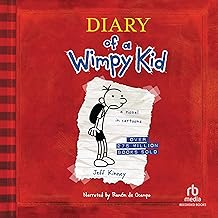
The latest installment in Jeff Kinney's phenomenally successful series, Diary of a Wimpy Kid Hot Mess, has arrived, promising another round of Greg Heffley's signature brand of awkward, self-centered, and utterly relatable middle school mayhem. For over a decade, readers have followed Greg's misadventures, and "Hot Mess" continues the tradition of blending simple cartoon illustrations with a narrative that perfectly captures the anxieties and humor of adolescence. This isn't just another book; it's a cultural touchstone for a generation of readers, and diving into its pages offers a hilarious reflection on the chaos of growing up.
As a long-time reviewer of children's and middle-grade literature, I've seen countless series come and go. The enduring appeal of Diary of a Wimpy Kid lies in its unwavering authenticity. Jeff Kinney possesses an almost uncanny ability to remember and articulate the minute social disasters and triumphs that define the middle school experience. "Hot Mess" leverages this expertise, presenting situations that will have both young readers and nostalgic adults nodding in recognition while laughing out loud.
What's the 'Hot Mess' All About? Unpacking the Plot
True to the series' formula, Diary of a Wimpy Kid Hot Mess doesn't follow a single, linear plot but rather a series of interconnected vignettes centered on Greg's life. The title itself, "Hot Mess," is a brilliant descriptor for Greg's perpetual state of being. In this book, the chaos often revolves around Greg's attempts to manage his responsibilities, image, and social standing, usually with disastrously funny results. Expect classic Wimpy Kid scenarios: ill-fated school projects, misunderstandings with friends like Rowley Jefferson, and desperate attempts to appear cooler or more competent than he actually is, all while navigating the minefield of family life with his brothers, Rodrick and Manny.
The genius of Kinney's storytelling is that these seemingly trivial events feel monumental through Greg's first-person perspective. A forgotten homework assignment becomes an epic quest for survival; a minor fashion faux pas feels like social suicide. This amplification of everyday drama is what makes the series so compelling and relatable for its target audience. They see their own amplified worries reflected in Greg's exaggerated panic.
Character Evolution: Is Greg Heffley Growing Up?
One of the most fascinating long-term discussions among fans of the series is the question of Greg's character development—or lack thereof. In Diary of a Wimpy Kid Hot Mess, we see the familiar Greg: often selfish, frequently lazy, and always convinced of his own genius despite overwhelming evidence to the contrary. However, keen readers might detect subtle shifts. While his core personality remains intact, the challenges he faces and the way he reflects on them (even if his reflections are misguided) show a character slowly, imperceptibly, becoming aware of a world slightly larger than himself.
This isn't a dramatic coming-of-age tale. That would betray the series' essence. Instead, it's a realistic portrayal of incremental growth. Greg might not learn a grand moral lesson, but he might, for instance, gain a slightly better understanding of friendship's give-and-take after a fallout with Rowley, even if he frames it entirely in terms of his own convenience. This nuanced, slow-burn evolution is a testament to Jeff Kinney's skill in maintaining character consistency while allowing room for the series to breathe and develop over nearly twenty books.
The Art of the Relatable Disaster: Why Kids Love This Series
The unparalleled success of the Diary of a Wimpy Kid franchise, including this latest entry tagged under Diary Of A Wimpy Kid Hot Mess, isn't an accident. It's built on a foundation of deep relatability. Kinney taps into universal childhood experiences: the fear of embarrassment, the struggle for independence, the frustration with siblings, and the desire to fit in. Greg Heffley is not a traditional hero; he's a flawed, often unlikeable protagonist, and that's precisely why readers connect with him. He gives them permission to laugh at their own flaws and anxieties.
Furthermore, the hybrid format of text and cartoons lowers the barrier to entry for reluctant readers. The illustrations aren't just decorations; they are integral to the humor and storytelling, providing visual punchlines and emphasizing Greg's emotional state. In "Hot Mess," this format continues to shine, with Kinney's deceptively simple drawings delivering some of the book's biggest laughs. The accessibility of this format has been instrumental in turning millions of children into enthusiastic readers.
Hot Mess in Context: How Does It Stack Up in the Series?
For parents and collectors wondering where Diary of a Wimpy Kid Hot Mess falls in the pantheon of Wimpy Kid books, the answer is reassuring. It is a solid, dependable entry that delivers exactly what fans expect. It may not have the groundbreaking shock of the first book or the heightened drama of some mid-series installments, but it provides consistent, high-quality humor and storytelling. It feels comfortable and familiar, like putting on a well-worn, favorite hoodie.
This consistency is the series' greatest strength and, for some critics, a potential weakness. However, for its intended audience—children who are themselves growing and changing—this familiarity is a comfort. They can return to Greg's world book after book and find a reliable source of laughter. "Hot Mess" proves that Kinney has not run out of ideas for putting his hero in cringe-worthy yet hilarious situations.
Beyond the Laughs: The Educational and Social Value
While the primary goal of Diary of a Wimpy Kid Hot Mess is entertainment, its value extends into educational and social-emotional learning. For developing readers, the books build vocabulary and reading stamina in a painless, engaging way. The first-person diary format also provides a model for personal writing and introspection, however flawed Greg's introspection may be.
Socially, the books offer a safe space to explore complex feelings. Readers see Greg navigate friendship conflicts, family tensions, and school stress. They witness his poor choices and their consequences, which can spark discussions about empathy, responsibility, and resilience. Greg is often a counter-example, and children are savvy enough to recognize that, leading to valuable critical thinking. Discussing why Greg's schemes fail can be a great conversation starter between parents and kids.
Final Verdict: Is 'Hot Mess' a Must-Read?
In conclusion, Diary of a Wimpy Kid Hot Mess is a triumphant return to the world of Greg Heffley. It delivers the perfect blend of laugh-out-loud humor, relatable middle-school angst, and clever cartooning that has defined the series for years. Whether you're a longtime fan or considering it as a gift for a young reader, this book will not disappoint. It stands as a testament to Jeff Kinney's enduring understanding of his audience and his ability to mine comedy from the everyday chaos of childhood.
For anyone looking to explore the chaotic, hilarious world of this series, starting with or adding "Hot Mess" to your collection is highly recommended. It's more than just a book; it's a gateway to discussions about growing up, a tool for encouraging reading, and most importantly, a guaranteed source of joy. Dive into the mess—you'll be glad you did.