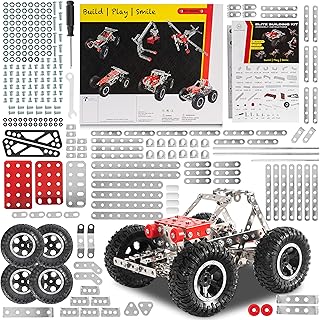
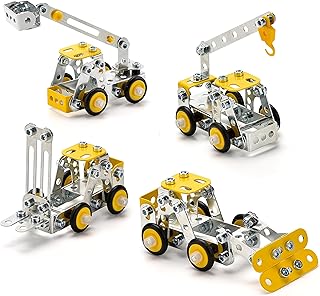
For over a century, the name Erector Set has been synonymous with hands-on engineering, creativity, and the pure joy of building something from the ground up. These iconic metal building toys have evolved from simple girder and bolt kits into sophisticated STEM learning platforms that challenge young minds. Today, sets like the 273-piece 3-in-1 Tower Crane, Frame Crane, and Windmill model represent the pinnacle of this evolution, offering a deep dive into mechanical principles through engaging, real-world projects. This isn't just play; it's the foundational work of building future innovators, engineers, and problem-solvers.
The core appeal of modern erector sets lies in their perfect blend of structured engineering and open-ended creativity. Unlike many toys with a single outcome, a comprehensive set provides the tools and instructions for multiple complex builds, encouraging repeated engagement and learning. The process of following detailed diagrams to construct a functional tower crane teaches precision, sequential thinking, and mechanical comprehension. Once the model is complete, the real magic happens: kids begin to understand the 'why' behind the design. They see how gears transfer motion, how a winch lifts a load, and how a stable base is crucial for a tall structure. This experiential learning is the heart of effective STEM education.
Why Metal Building Toys Are a Cornerstone of STEM Learning
In a digital age, the tactile feedback of metal building toys is invaluable. The act of connecting metal beams with nuts and bolts develops fine motor skills, hand-eye coordination, and spatial reasoning in a way that swiping a screen never can. Each connection is a deliberate action with a clear physical result, reinforcing concepts of cause and effect. Furthermore, working with real hardware introduces children to basic engineering tools and fastening methods, demystifying how the world around them is physically assembled. This hands-on approach builds confidence and a 'can-do' attitude toward technical challenges.
STEM (Science, Technology, Engineering, and Mathematics) is more than an acronym; it's a framework for critical thinking. A complex engineering toy like a multi-model crane set naturally integrates all four disciplines. Science is applied through understanding forces, balance, and energy. Technology is seen in the tools (screwdriver, wrench) and the designed outcome. Engineering is the entire process of designing and building a structure to meet a specific function. Mathematics is inherent in following measurements, counting pieces, and understanding geometric shapes and angles. This integrated learning makes the concepts stick far better than rote memorization.
Deep Dive: The 3-in-1 Model Crane Building Experience
Let's explore what makes a specific set, such as the 273-piece 3-in-1 model kit, an exemplary educational toy. With 273 precision-made metal parts, plastic gears, a motor, and a comprehensive instruction manual, this kit is a workshop in a box. The three builds—a Tower Crane, a Frame Crane, and a Windmill—are not just aesthetically different; they teach distinct engineering principles.
The Tower Crane project focuses on vertical construction and stability. Building it teaches kids about the importance of a broad, weighted base and a triangulated structure to prevent swaying—principles used in every skyscraper. The motorized winch adds a layer of technology, showing how electrical energy is converted into rotational motion to lift and lower the hook. The Frame Crane, often a mobile or gantry-style crane, introduces horizontal movement and structural framing. Finally, the Windmill model shifts focus to renewable energy concepts, demonstrating how gear trains can change the speed and direction of rotation captured from 'wind.'
The Cognitive and Developmental Benefits of DIY Building Projects
Engaging in such DIY building projects offers a cascade of cognitive benefits. Problem-Solving: When a gear doesn't mesh or a beam doesn't align, the child must diagnose and fix the issue—a core engineering skill. Patience and Perseverance: Complex builds can't be rushed. They require sustained focus over hours, teaching delayed gratification and resilience. Reading Comprehension: Interpreting complex, step-by-step visual instructions is a vital technical skill. Creative Confidence: After mastering the instructed models, many children are inspired to design their own creations, applying the principles they've learned in novel ways. This transition from following instructions to innovative design is the ultimate goal of creative play.
Choosing the Right Erector Set: A Guide for Parents and Gift-Givers
With so many options, selecting the ideal set can be daunting. The 273-piece 3-in-1 set is specifically targeted for kids aged 8-12, which is a critical window for developing logical and spatial reasoning. For this age group, look for sets that: 1) Offer multiple build options to extend play value, 2) Include motorized elements to introduce basic electronics, 3) Have a high piece count to allow for complexity and post-instruction creativity, and 4) Feature realistic, functional models that connect play to the real world. A set that builds a recognizable crane or vehicle is often more engaging than an abstract sculpture.
As a birthday gift or holiday present, an Erector Set stands out. It's a gift that says, "I believe in your ability to create and solve problems." It provides not just a momentary thrill, but dozens of hours of immersive, rewarding activity. It's a shared experience, too; parents or older siblings can join in the build, offering guidance and celebrating milestones together, making it a gift that fosters connection as well as cognition.
Beyond the Build: Fostering a Lifelong Love for Engineering
The ultimate value of these toys extends far beyond the finished crane sitting on a shelf. They plant a seed. A child who successfully builds a complex mechanical model gains a profound sense of accomplishment. They begin to look at bridges, construction sites, and machines not as mysterious objects, but as systems they can understand. This foundational literacy in how things work is the first step toward potential careers in engineering, architecture, robotics, or industrial design. In a world facing complex challenges, we need thinkers who aren't intimidated by complexity but are energized by the process of building a solution, piece by piece.
In conclusion, modern Erector Sets are far more than toys. They are structured, engaging portals into the world of engineering and design. By combining the timeless appeal of construction with clear STEM learning outcomes, sets like the 3-in-1 Tower Crane provide a perfect platform for developing critical 21st-century skills. They teach patience, precision, and physics through doing, creating memories and competencies that last a lifetime. For any child with a curious mind and a desire to build, it's an investment in their creative and intellectual future.