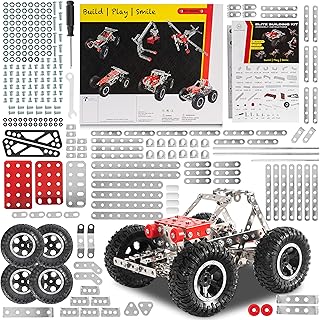
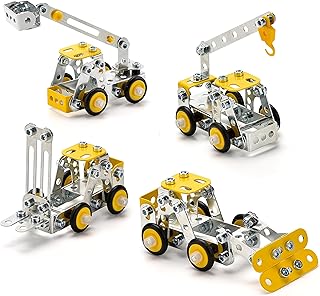
For generations, the name Erector Set has been synonymous with hands-on engineering, sparking curiosity and problem-solving skills in young minds. These classic kits of metal beams, nuts, and bolts taught fundamental principles of mechanics and construction. Today, this legacy has evolved dramatically, merging with cutting-edge technology to create immersive STEM experiences. Modern iterations, like comprehensive STEM robotics kits, are not just about building static structures; they're about programming movement, integrating sensors, and controlling creations via apps and remotes. This evolution represents a significant leap from simple construction to interactive, computational thinking.
The core appeal of the traditional Erector Set—learning by doing—remains, but its scope has expanded. Contemporary kits introduce children to robotics, coding, and mechatronics, fields critical for future innovation. This guide explores how modern building toys have transformed, focusing on their educational value, key features to look for, and why they make exceptional educational gifts. We'll delve into a prime example of this new wave: the LECPOP 5-in-1 Building Toys STEM Robotics Kit, a 430-piece set that embodies this perfect fusion of classic engineering and modern tech.
From Gears to Code: The New Era of Engineering Toys
The journey from the simple metal erector set to today's sophisticated kits is a story of educational advancement. Initially focused on spatial reasoning and manual dexterity, the goal was to follow instructions to build a predetermined model. The modern objective is far more dynamic: to build, program, and command. This shift aligns with contemporary STEM (Science, Technology, Engineering, and Mathematics) pedagogy, which emphasizes interdisciplinary learning and real-world application.
Kits now often include components like microcontrollers, motors, infrared sensors, and Bluetooth modules. This allows children to progress from mechanical assembly to DIY engineering projects that involve logic and sequence. The ability to control a creation with a remote or a smartphone app adds a layer of excitement and tangible reward, reinforcing learning through immediate feedback. It's no longer just about what you can build, but what you can make your build *do*.
Key Features of a Modern STEM Robotics Kit
When evaluating a modern engineering kit, several features distinguish a basic set from a transformative educational tool. Firstly, look for versatility. Can the kit build multiple models? A 5-in-1 or similar multi-model kit offers extended play value and teaches adaptability, as the same components can be reconfigured for different functions. Secondly, control methods are crucial. The inclusion of both a physical remote control and a smartphone app caters to different learning styles and introduces concepts of wireless communication and UI interaction.
Thirdly, the component quality and count matter. A kit with 400+ pieces, like the LECPOP set, provides complexity suitable for older children (ages 8-14), encouraging patience and advanced problem-solving. The pieces should be durable, compatible, and safe. Finally, the educational scaffolding is key. Clear, step-by-step instructions are essential for initial success, but the best kits also encourage freeform, open-ended building, allowing kids to apply the principles they've learned to invent their own RC robot or machine.
Deep Dive: The LECPOP 5-in-1 STEM Robotics Kit Experience
As a case study in modern engineering education, the LECPOP 5-in-1 Building Toys STEM Robotics Kit exemplifies the evolution of the erector set. With 430 pieces, it offers substantial building challenges for kids aged 6 to 14. The promise of building five different functional models—including a particularly engaging remote control excavator—keeps the interest alive over multiple sessions. This isn't a one-and-done toy; it's a platform for exploration.
The dual control mode (2.4GHz remote and app control) is a standout feature. Using the remote offers immediate, tactile fun, ideal for younger users or collaborative play. The app control, however, opens a door to more nuanced command, often allowing for more precise movements and sometimes even simple programming sequences. This progression mirrors real-world engineering, where manual control gives way to automated, software-driven systems. Building the excavator model, for instance, teaches principles of hydraulics (via gear systems), structural stability, and wireless control—all wrapped in a fun, play-based activity.
Building More Than Robots: Developing Essential Skills
The educational outcomes of engaging with a kit like this extend far beyond the playroom. Children develop fine motor skills and hand-eye coordination while handling and assembling the small components. Spatial and geometric intelligence is honed as they visualize how 2D instruction steps translate into a 3D object. The construction process inherently teaches logical sequencing and patience, as steps must be followed in order for the model to function correctly.
Perhaps most importantly, these kits build resilience and problem-solving. When a gear doesn't mesh or a section is unstable, the child must debug their build—a fundamental engineering skill. This trial-and-error process, leading to a finally functional, moving robot, provides a powerful boost in confidence and self-efficacy. It transforms abstract concepts from physics and computer science into concrete, understandable experiences.
Why Modern Erector Sets Make Perfect Gifts
In a world saturated with passive screen-based entertainment, a modern Erector Set offers a compelling alternative. It is an active, engaging, and productive gift. Unlike many toys that have a narrow play pattern, a high-quality STEM robotics kit provides dozens of hours of challenging and rewarding activity. It supports solitary, focused play as well as collaborative family projects, making it a versatile addition to any home.
For parents and gift-givers, it represents an investment in a child's future. It's a tangible way to support an interest in engineering, coding, or design in a fun, low-pressure environment. The skills learned—critical thinking, perseverance, basic mechanics—are universally applicable. Whether a child becomes an engineer or not, the logical framework and "maker" mindset fostered by these kids science kits are invaluable.
Choosing the Right Kit for Your Child
Selecting the ideal STEM kit depends on the child's age, interest, and experience. For beginners (ages 6-8), look for kits with larger pieces, simpler models, and emphasis on remote control fun. For the 8-12 range, kits with more pieces (300+) and multiple build options, like the LECPOP 5-in-1, are ideal. They offer enough complexity to be challenging but not frustrating. For teens (12-14+), seek out kits that introduce more advanced concepts, perhaps with block-based coding interfaces in the app for greater customization.
Always check the recommended age range, but consider your child's specific aptitude. A patient, mechanically-inclined 7-year-old might thrive with a kit marked for 8+, while a new-to-building 10-year-old might benefit from starting with a slightly simpler set to build confidence. The goal is to find the sweet spot where the challenge is engaging but achievable.
Conclusion: Building the Future, One Kit at a Time
The humble erector set has undergone a remarkable transformation. It has evolved from a box of metal parts into a gateway to robotics, programming, and 21st-century engineering. Kits like the LECPOP 5-in-1 STEM Robotics Kit honor the hands-on, constructive spirit of the original while propelling it into the digital age. They provide a critical, screen-smart alternative that develops not just models, but minds.
By choosing such a kit, you're offering more than a toy. You're providing a toolkit for innovation, a sandbox for experimentation, and a foundation for logical thinking. In a world that increasingly values STEM literacy, giving the gift of a modern erector set is an investment in creativity, confidence, and the engineers, problem-solvers, and inventors of tomorrow.